

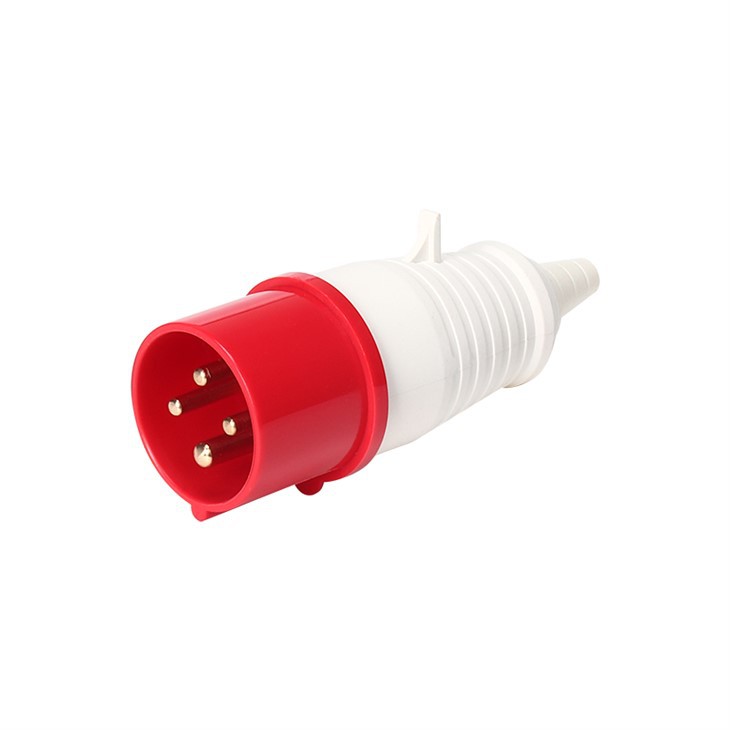
 IP44 vs IP67 Industrial Plugs: How to Choose the Right Protection Level
When choosing an industrial plug and socket, one of the most important factors to consider is the IP protection rating.
IP44 and IP67 are two common protection levels used for industrial electrical connectors. But which one is better for your application?
The answer depends on where and how the industrial plug will be used. Choosing a higher IP rating is not always necessary, while choosing insufficient protection can affect the reliability and service life of your electrical connection.
This guide explains the difference between IP44 and IP67 industrial plugs and helps you select the right protection level for your application.
What Does IP Rating Mean?
IP stands for Ingress Protection. The IP rating is defined by two numbers.
The first number indicates protection against solid objects such as dust.
The second number indicates protection against water.
For example:
IP44
4: Protection against solid objects larger than 1 mm
4: Protection against water splashes from any direction
IP67
6: Dust-tight protection
7: Protection against temporary immersion in water under specified test conditions
Therefore, IP67 provides a significantly higher level of protection against dust and water than IP44.
IP44 Industrial Plugs: When Should You Choose Them?
An IP44 industrial plug is a practical choice for applications where the connector may experience occasional water splashes but is not normally exposed to heavy rain, water jets, or immersion.

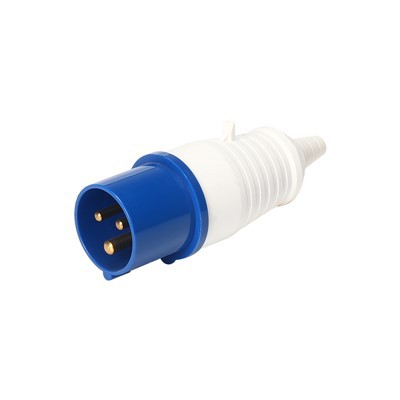
Typical applications include:
Indoor factories and workshops
Construction sites with limited water exposure
Temporary power distribution
Industrial machinery
Stage and event equipment
Workshops and maintenance areas
General commercial applications
IP44 can be a cost-effective solution when the working environment is relatively dry and the electrical connector does not require complete dust-tight or immersion protection.
Advantages of IP44
Suitable for general industrial applications
Good protection against water splashes
Easy to install and operate
Cost-effective for many applications
Available in various current and pole configurations
However, IP44 may not be the best choice for environments where the connector is continuously exposed to rain, dust, mud, or water.
IP67 Industrial Plugs: When Should You Choose Them?
An IP67 industrial plug is designed for more demanding environments where protection against dust and water is critical.


IP67 industrial plugs are commonly used in:
Outdoor construction sites
Solar and photovoltaic systems
Agricultural equipment
Outdoor events
Ports and docks
Temporary outdoor power systems
Equipment exposed to rain and moisture
Industrial environments with high levels of dust
The key advantage of IP67 is that the connector is dust-tight and offers a much higher level of water protection than IP44.
Advantages of IP67
Dust-tight construction
Higher water protection
Suitable for demanding outdoor environments
Better suited to rain and moisture exposure
Suitable for many outdoor and temporary power applications
Helps improve connection reliability in harsh environments
However, IP67 does not mean that the connector can be permanently submerged underwater. The IP67 rating refers to temporary immersion under specified test conditions.
IP44 vs IP67: Which One Should You Choose?
The simplest way to choose between IP44 and IP67 is to consider the actual working environment.
| Working Environment | Recommended Protection |
|---|---|
| Dry indoor workshop | IP44 |
| Indoor industrial machinery | IP44 |
| General temporary power | IP44 |
| Construction site | IP44 / IP67 |
| Outdoor construction | IP67 |
| Frequent rain exposure | IP67 |
| Solar/PV applications | IP67 |
| Dusty outdoor environment | IP67 |
| Agricultural equipment | IP67 |
| Wet or demanding environment | IP67 |
Choose IP44 If:
The industrial plug is mainly used indoors or in a relatively dry environment and only needs protection against occasional water splashes.
Choose IP67 If:
The connector will be used outdoors or exposed to rain, dust, moisture, mud, or other harsh environmental conditions.
In general, IP67 is the safer choice when environmental conditions are uncertain or changing, provided the product and installation are suitable for the application.
Does a Higher IP Rating Always Mean Better?
Not necessarily.
The correct question is not "Which IP rating is higher?" but "Which IP rating is appropriate for my application?"
If an industrial plug is installed indoors in a dry factory, IP44 may already provide sufficient protection. Choosing IP67 in such an environment may add cost without providing a meaningful benefit.
On the other hand, using IP44 outdoors where the connector is frequently exposed to rain or dust may provide insufficient protection.
Therefore, selecting the right IP rating helps balance protection, cost, installation requirements, and product performance.
Other Factors to Consider
IP protection is only one part of industrial plug selection.
Before purchasing an industrial plug and socket, you should also confirm:
Current rating: Common options include 16A, 32A, 63A and 125A.
Voltage: Make sure the connector matches the electrical system.
Pole configuration: For example, 2P+E, 3P+E or 3P+N+E.
Cable size: Confirm that the plug is compatible with the required cable diameter.
Installation method: Choose from portable plugs, panel-mounted sockets, wall-mounted sockets, interlocked sockets, or other suitable configurations.
Operating environment: Consider temperature, dust, water, chemicals, vibration, mechanical impact, and frequency of use.
Conclusion
Choosing between IP44 and IP67 industrial plugs depends mainly on the working environment.
For dry indoor applications and general industrial use, IP44 can be an economical and practical choice.
For outdoor applications, dusty environments, frequent rain exposure, solar systems, agricultural equipment, and other demanding conditions, IP67 is generally more suitable.
Before selecting a product, always consider the complete application environment rather than choosing an IP rating based on protection level alone.
Need help choosing the right industrial plug? Contact HFE for professional industrial plug and socket solutions.


