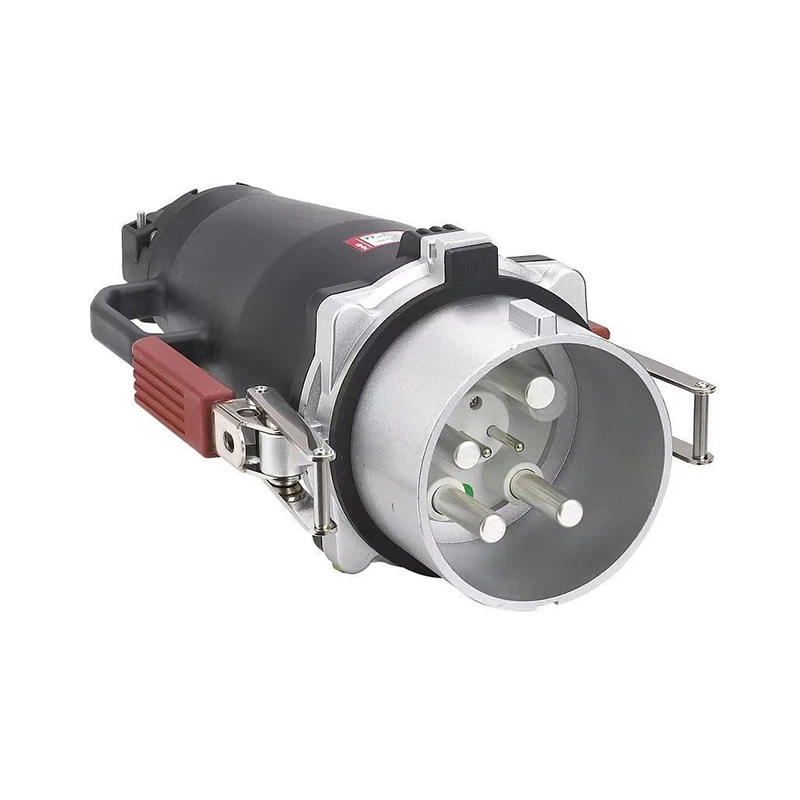
High-power sockets are power interfaces specifically designed for high-power household appliances such as air conditioners and electric heaters. They have a rated load of 16 amps, and at a maximum voltage of 242V, their actual maximum power handling capacity is 3872 watts, which is the upper limit for safe use. The hole spacing of a 16A socket is approximately 10mm, while that of a 10A socket is approximately 8mm; the two cannot be used interchangeably.
The product's outer shell is made of high flame-retardant and heat-resistant alloy engineering plastic, with a self-extinguishing temperature exceeding 850℃. The internal sockets use tin-phosphor bronze material, which has strong conductivity and low temperature rise. Some products integrate overload protection devices and power switches, automatically cutting off power and supporting reset when the current is overloaded. Some models have automatic power-off, overload protection, and leakage protection functions. Some models also feature lightning protection, surge protection, waterproof and dustproof design, and child-proof design, suitable for various household electrical environments.
A standard socket typically has a maximum power capacity of 2,500 watts, while high-power appliances such as a 2-horsepower air conditioner (approximately 1,800 watts) or an electric heater (1,000 watts or more) require a dedicated socket to prevent overloading of the circuit and potential fires.