As an industrial connector supplier, I've witnessed firsthand the critical role that signal integrity plays in the performance of industrial connectors. In industrial settings, where reliability and precision are non - negotiable, understanding and meeting signal integrity requirements is of utmost importance.
Understanding Signal Integrity in Industrial Connectors
Signal integrity refers to the ability of a signal to travel from the source to the destination without significant degradation. In the context of industrial connectors, this means that the electrical signals transmitted through the connectors should maintain their original characteristics, such as amplitude, frequency, and phase.
One of the primary factors affecting signal integrity is impedance matching. Impedance is the opposition that a circuit presents to the flow of alternating current. When the impedance of the connector and the connected components are not matched, reflections can occur. These reflections can cause signal distortion, leading to errors in data transmission or malfunctions in industrial equipment. For example, in high - speed data communication systems, even small impedance mismatches can result in significant signal degradation.
Another crucial aspect is crosstalk. Crosstalk occurs when a signal in one conductor induces an unwanted signal in an adjacent conductor. In industrial connectors, which often have multiple conductors in close proximity, crosstalk can be a major problem. High - density connectors, in particular, are more prone to crosstalk. To mitigate crosstalk, connectors are designed with proper shielding and spacing between conductors.
Specific Signal Integrity Requirements for Different Types of Industrial Connectors
IP44 Electrical Industrial Connectors
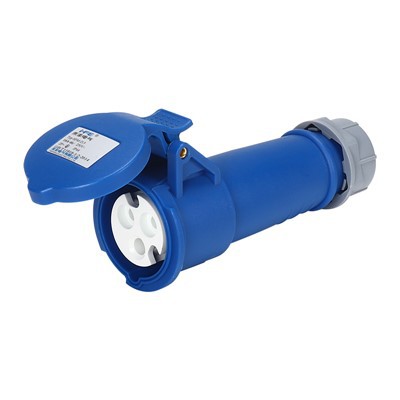
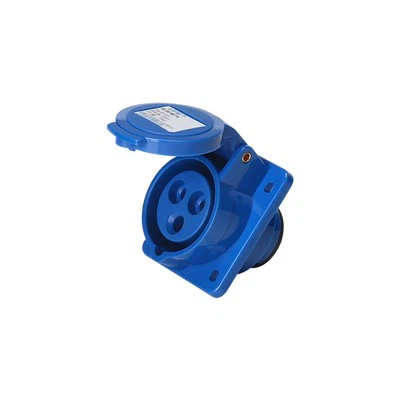
IP44 Electrical Industrial Connectors are designed to provide a certain level of protection against dust and water splashes. In terms of signal integrity, these connectors need to ensure stable signal transmission even in harsh environments. The materials used in the construction of these connectors should have good electrical conductivity and insulation properties. For example, the contacts should be made of high - quality metals that can resist corrosion and oxidation, which could otherwise affect the signal quality.

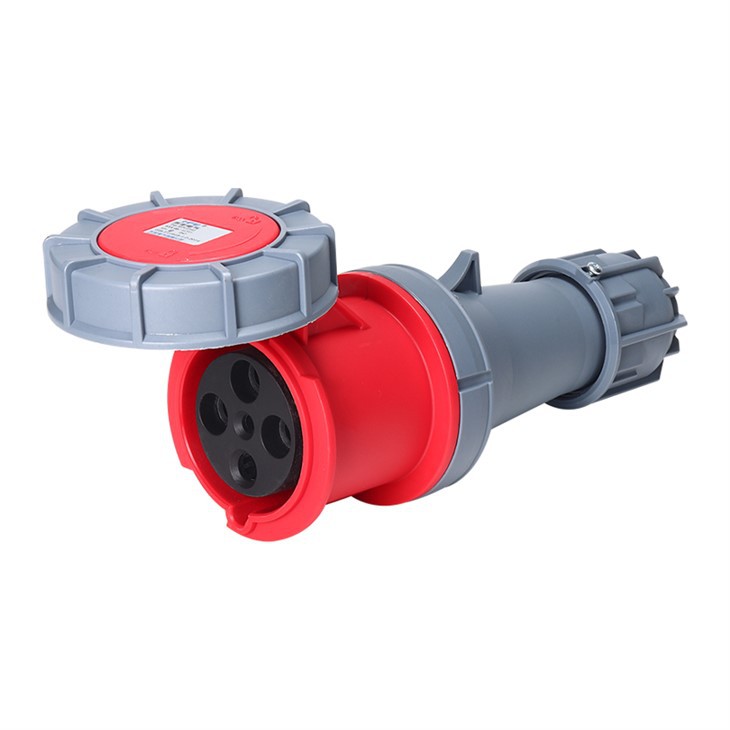
The IP44 rating also implies that the connector should be able to maintain its signal integrity under mechanical stress. The housing of the connector should be robust enough to protect the internal components from physical damage, which could disrupt the signal path. Additionally, the sealing mechanism of the connector should prevent the ingress of dust and water, as these contaminants can cause short - circuits or other electrical problems.
3 Phase Industrial Connector
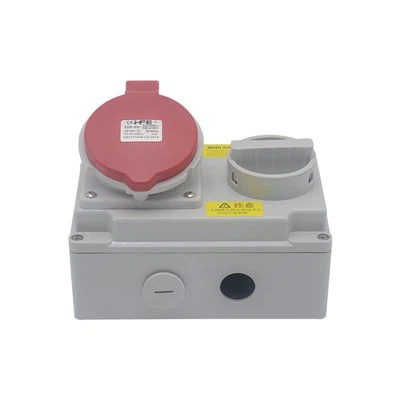
3 Phase Industrial Connector are used in industrial power systems to transmit three - phase electrical power. Signal integrity in these connectors is crucial for the efficient and safe operation of industrial machinery. The connectors need to ensure balanced power distribution among the three phases. Any imbalance in the phase signals can lead to overheating, reduced efficiency, and even damage to the connected equipment.
To achieve good signal integrity, 3 phase connectors are designed with precise contact geometries and proper insulation. The contacts should be able to handle high currents without significant voltage drops. Additionally, the connectors should be able to withstand high - frequency harmonics that may be present in the power system. These harmonics can cause interference and affect the overall performance of the system.
16A Industrial Connector
16A Industrial Connector are commonly used in industrial applications where a moderate amount of electrical current needs to be transmitted. Signal integrity in these connectors is related to the ability to handle the rated current without overheating or causing voltage fluctuations.
The contacts in 16A connectors should have low resistance to minimize power losses. This requires high - quality materials and proper manufacturing processes. The connector should also be able to maintain a stable connection under vibration and mechanical stress, as these factors can affect the electrical contact and lead to signal degradation.
Design and Manufacturing Considerations for Signal Integrity
To meet the signal integrity requirements, industrial connector manufacturers need to pay attention to several design and manufacturing aspects.
In terms of design, the layout of the conductors within the connector is crucial. The conductors should be arranged in a way that minimizes crosstalk and impedance mismatches. For example, differential pairs can be used in high - speed data connectors to reduce electromagnetic interference. The use of shielding materials, such as metal enclosures or conductive coatings, can also help to protect the signals from external interference.
During the manufacturing process, quality control is essential. The contacts should be manufactured with high precision to ensure proper electrical contact. The plating of the contacts should be uniform and of high quality to prevent corrosion. The insulation materials should be carefully selected to provide good electrical insulation and mechanical strength.
Testing and Validation of Signal Integrity
Before industrial connectors are released to the market, they need to undergo rigorous testing to ensure that they meet the signal integrity requirements.
One of the common tests is the impedance measurement. This test measures the impedance of the connector at different frequencies to ensure that it is within the acceptable range. Time - domain reflectometry (TDR) is a widely used technique for impedance measurement. It sends a short electrical pulse through the connector and measures the reflections to determine the impedance profile.
Crosstalk testing is also important. This test measures the amount of interference between adjacent conductors. The connector should be tested at different frequencies and under different operating conditions to ensure that the crosstalk is within the specified limits.
Meeting the Challenges of Signal Integrity in Industrial Environments
Industrial environments are often harsh, with factors such as high temperatures, humidity, vibration, and electromagnetic interference. These factors can pose significant challenges to signal integrity.
To address these challenges, industrial connectors need to be designed with robust materials and protective features. For example, connectors can be equipped with heat - resistant materials to withstand high temperatures. Vibration - resistant designs, such as locking mechanisms, can be used to ensure a stable connection.
In addition, electromagnetic shielding can be used to protect the signals from external electromagnetic interference. This is particularly important in industrial settings where there are many electrical devices and machinery that can generate electromagnetic fields.
Conclusion
Signal integrity is a critical aspect of industrial connectors. Whether it's IP44 Electrical Industrial Connectors, 3 Phase Industrial Connector, or 16A Industrial Connector, meeting the signal integrity requirements is essential for the reliable operation of industrial equipment.
As an industrial connector supplier, we are committed to providing high - quality connectors that meet the strictest signal integrity standards. If you are in the market for industrial connectors and have specific signal integrity requirements, we invite you to contact us for a detailed discussion. Our team of experts can help you select the right connectors for your application and ensure that they meet your performance needs.
References
- Grover, R. C. (2008). Understanding Signal Integrity. Prentice Hall.
- Montrose, M. I. (2000). Printed Circuit Board Design Techniques for EMC Compliance: A Handbook for Designers. Wiley - Interscience.
- Johnson, H. W., & Graham, M. (2003). High - Speed Signal Propagation: Advanced Black Magic. Prentice Hall.