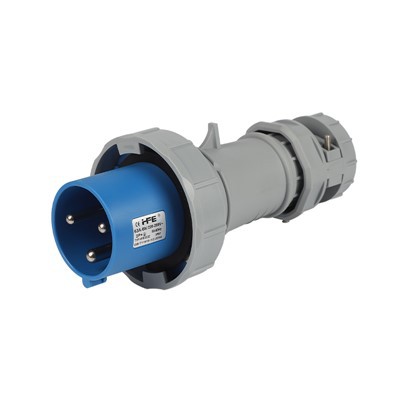
How to Ensure the Reliability of a Large Current Plug Socket
As a supplier of large current plug sockets, I understand the critical importance of reliability in these electrical components. Large current plug sockets are widely used in industrial, commercial, and high - power residential applications. Ensuring their reliability is not only about meeting safety standards but also about providing consistent performance over an extended period. In this blog, I will share some key strategies and considerations for guaranteeing the reliability of large current plug sockets.
1. High - Quality Materials Selection
The foundation of a reliable large current plug socket lies in the materials used. High - quality conductors are essential. Copper is a popular choice due to its excellent electrical conductivity. For large current applications, oxygen - free copper is often preferred as it has lower resistance, which reduces power losses and heat generation. The cross - sectional area of the conductor also matters. A larger cross - sectional area can handle higher currents without overheating.
Insulating materials play a crucial role in preventing electrical leakage and short - circuits. Materials like high - grade plastic polymers or ceramics are commonly used. They should have good dielectric strength, high temperature resistance, and be resistant to chemicals and environmental factors. For example, polycarbonate is a well - known insulating material that offers high impact resistance and good electrical insulation properties.
2. Precise Manufacturing Processes
Precise manufacturing is vital for ensuring the proper functioning and reliability of large current plug sockets. The contacts in the socket and plug need to be accurately machined to ensure a good fit. A loose connection can lead to increased resistance, which in turn causes overheating and potential damage to the socket and the connected equipment.
The assembly process must also be carefully controlled. All components should be properly aligned and securely fixed. For instance, the screws used to hold the conductors in place should be tightened to the correct torque. This ensures that there is a stable electrical connection and reduces the risk of the connection coming loose over time due to vibration or thermal expansion and contraction.
3. Stringent Quality Control
During the production process, stringent quality control measures should be in place. Every large current plug socket should undergo a series of tests before leaving the factory. Electrical performance tests are essential, including measuring the resistance, dielectric strength, and current - carrying capacity. Temperature rise tests are also conducted to ensure that the socket does not overheat under normal operating conditions.
Visual inspections are equally important. Any defects such as cracks, scratches, or misalignments can indicate potential problems. Quality control personnel should carefully examine each socket to ensure that it meets the specified standards. Additionally, samples from each production batch should be randomly selected for more comprehensive testing to detect any potential issues with the manufacturing process.
4. Compatibility and Ratings
It is crucial to clearly define the compatibility and ratings of large current plug sockets. The socket should be rated for the appropriate voltage and current. For example, a socket designed for a high - power industrial application may be rated for 400V and 100A, while a socket for a lower - power commercial setup may be rated for 230V and 32A. Using a socket with incorrect ratings can lead to overheating and electrical failures.
The plug and socket should also be designed to be fully compatible. This includes the physical dimensions, pin configuration, and the locking mechanism. Using a non - compatible plug can result in a poor connection, which can compromise the reliability and safety of the electrical system.
5. Thermal Management
Large current plug sockets generate heat during operation. Effective thermal management is essential to prevent overheating, which can degrade the materials and reduce the lifespan of the socket. One way to manage heat is through proper ventilation. Sockets can be designed with ventilation holes or channels to allow heat to dissipate more easily.
Another approach is to use heat - sink materials. These materials can absorb and transfer heat away from the socket. For example, some high - performance large current plug sockets are equipped with metal heat - sinks that are in direct contact with the conductors. This helps to keep the temperature within a safe range.
6. Environmental Resistance
Large current plug sockets are often used in harsh environments. They need to be resistant to moisture, dust, and chemicals. For outdoor applications, weather - proof housing is necessary. This can be achieved by using materials that are resistant to UV radiation and water ingress. Gaskets and seals can be used to prevent water and dust from entering the socket.
In industrial environments where there may be exposure to chemicals, the socket should be made of materials that can withstand chemical corrosion. For example, some sockets are coated with special anti - corrosion layers to protect the conductors and the housing.
7. Regular Maintenance and Inspection
Even the most reliable large current plug sockets require regular maintenance and inspection. Over time, dirt, dust, and debris can accumulate in the socket, which can affect the electrical connection. Regular cleaning can help to prevent this. Inspecting the socket for signs of wear and tear, such as loose connections or damaged insulation, is also important.
Users should be provided with clear instructions on how to maintain and inspect the socket. This can help to identify potential problems early and take corrective actions before they lead to major failures.
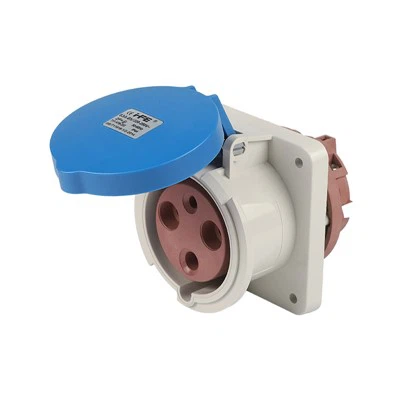
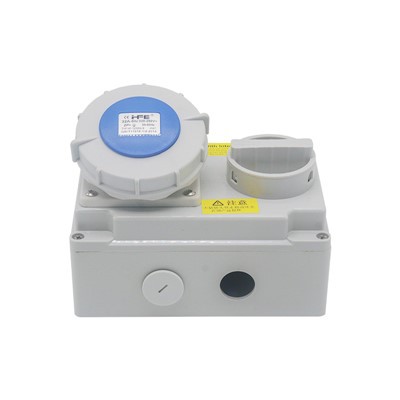
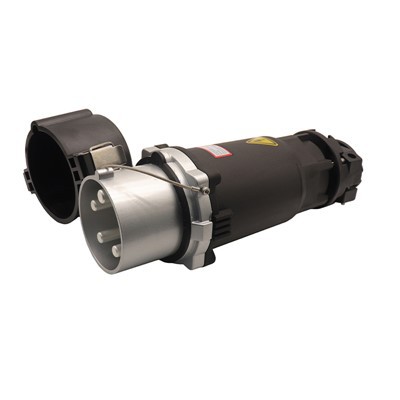
In the market, we offer a wide range of products to meet different needs. Our Large Current Industrial Plug is designed with high - quality materials and precise manufacturing processes to ensure reliability. Our High Duty Electrical Connectors provide excellent electrical conductivity and stable connections. And our High Power Industrial Socket is built to handle high currents and harsh environments.
If you are in need of reliable large current plug sockets, we are here to provide you with the best solutions. Whether you are an industrial manufacturer, a commercial facility operator, or a contractor, our products can meet your requirements. We welcome you to get in touch with us for further discussions and to start the procurement process.


References
- Grover, A. F. (1976). Inductance Calculations: Working Formulas and Tables. Dover Publications.
- Perry, R. H., & Green, D. W. (2007). Perry's Chemical Engineers' Handbook. McGraw - Hill Professional.
- Ulaby, F. T., & Maharbiz, M. M. (2018). Fundamentals of Applied Electromagnetics. Pearson.